Korea and Brazil Forge Rare Earth and Space Cooperation Pact
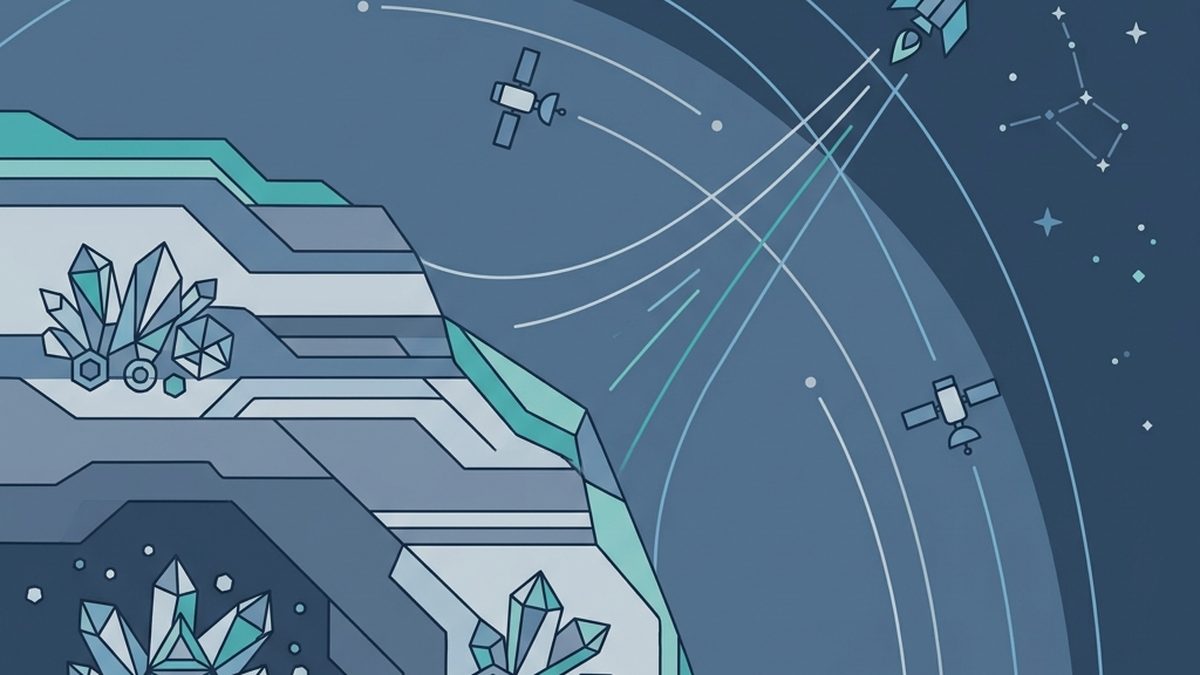
South Korea and Brazil have agreed to build cooperation around critical mineral supply chains and space technology, drawing the two economies closer as both look to reduce their exposure to concentrated global sourcing. The agreement came out of a meeting between South Korean President Lee Jae-myung and Brazilian President Luiz Inácio Lula da Silva, who framed the partnership around rare earths, other core minerals, and joint work in space.
Why Minerals Anchored the Talks
The centerpiece of the discussion was a shared interest in rare earths and critical minerals — the inputs behind electric vehicles, batteries, defense hardware, and advanced electronics. South Korea imports nearly all of the rare earth material it processes and has spent recent years searching for sourcing outside a small number of dominant suppliers. Brazil, for its part, holds some of the world’s larger untapped rare earth reserves and has been courting industrial partners able to help it move beyond raw extraction toward processing and higher-value production.
That combination gives each side something the other wants. Korean manufacturers gain a potential alternative supply base for materials whose availability has become a strategic vulnerability, while Brazil gains access to the capital and refining know-how needed to develop deposits it has struggled to commercialize on its own.
Space as the Second Track
Alongside minerals, the two leaders committed to accelerating cooperation in space. Brazil operates the Alcântara launch site, one of the closest major launch facilities to the equator — a geographic advantage that lowers the energy cost of reaching orbit and has long drawn international interest. South Korea, which has built out its own launch vehicle and satellite programs in recent years, brings hardware and systems experience that complements Brazil’s location and existing infrastructure.
Neither government detailed the specific projects that will follow, but pairing launch access with an established space-industrial base points toward areas such as satellite development, launch services, and joint research.
What the Partnership Signals for Both Economies
For Seoul, the arrangement fits a broader push to diversify where it sources the materials underpinning its export industries, spreading risk across more partners rather than relying on any single supplier. For Brasília, closer ties with an advanced manufacturing economy support its ambition to capture more of the value chain at home instead of exporting raw commodities.
The immediate agreements are directional rather than operational, and the substance will depend on the specific projects, investment commitments, and timelines that follow. Still, the meeting establishes minerals and space as the two pillars around which a deeper Korea-Brazil relationship is expected to develop.
Sources (2) — ChosunBiz · The Korea Economic Daily
- ChosunBiz, 2026-07-27
- The Korea Economic Daily, 2026-07-27