Korea Clears KTX-SRT Merger, With 10% Fare Cut Coming in September
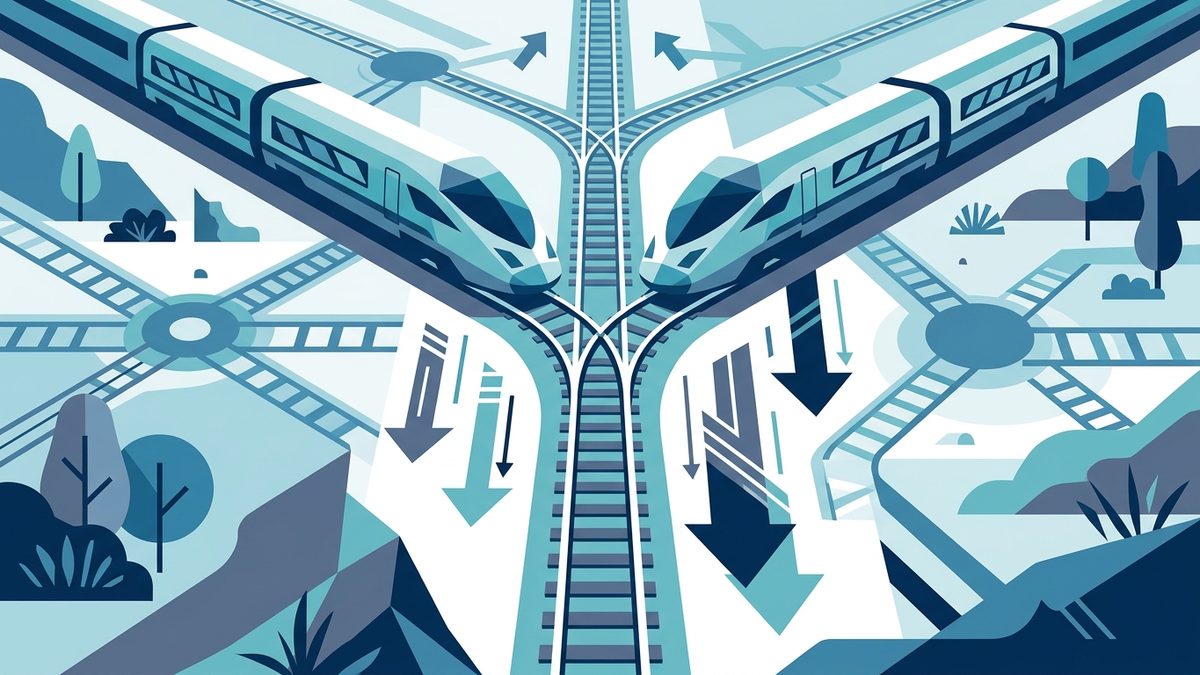
Korea’s two high-speed rail operators are about to become one — and train travel is about to get cheaper. The Korea Fair Trade Commission has granted final approval for the combination of Korea Railroad Corporation (Korail), which runs the KTX, and SR Corporation, operator of the rival SRT. The merger takes effect in September with an immediate consumer payoff: fares roughly 10 percent lower, expanded service frequencies, and about 15,000 additional weekday seats, arriving just ahead of the Chuseok holiday travel rush.
The End of the Two-Operator Era
The approval closes a chapter that opened with the great restructuring of Korean rail two decades ago. Korail’s lineage runs back to the Korean National Railroad, which began operations on September 1, 1963, before being reorganized into its current corporate form on January 1, 2005. That 2005 overhaul split the industry vertically — train operations went to Korail, while a separate body took charge of building and maintaining the tracks — and later produced SR as a second high-speed operator running SRT trains in parallel with the KTX.
That parallel structure is what the regulator has now agreed to unwind. With the combination approved, a single operator will manage the country’s premium rail services across a national network that spans 4,128.6 kilometers and serves 691 stations.
Cheaper Tickets After a 15-Year Freeze
The headline concession for passengers is the price. High-speed fares will come down about 10 percent from September — a striking move given that Korail’s ticket prices have not moved at all since a 4.9 percent increase in 2011. After fifteen years of frozen fares, the first change is a cut, not a hike.
Capacity grows alongside the discount. The merged operation plans roughly 15,000 additional weekday seats and more frequent departures, easing one of the chronic frustrations of Korean holiday travel: the near-impossibility of booking a high-speed seat during peak periods. The September timing means the changes will face their first real stress test almost immediately, when Chuseok traffic peaks.
A Discount Atop a Strained Balance Sheet
The generosity comes with an uncomfortable financial backdrop. Korail’s accumulated losses had reached 18.66 trillion won by the end of 2021, with that single year contributing more than 1.1 trillion won to the pile. Revenue has been recovering — from roughly 5.4 trillion won in 2022 to about 5.8 trillion won in 2023 — but a 10 percent haircut on every high-speed ticket cuts against the operator’s most profitable business line.
The implicit bet is that consolidation savings — one scheduling system, one maintenance regime, one sales apparatus instead of two — can fund the discount. Whether those efficiencies materialize fast enough to offset the fare cut is the open question the approval leaves behind, and the answer will land on the books of a company that can ill afford another decade of red ink.
The Watchdog That Signed Off
The body that cleared the deal, the Korea Fair Trade Commission, was established on April 1, 1981, having grown out of a fair-trade unit inside the Economic Planning Board. Its decisions are made by a nine-member commission — including the chair and vice-chair, with four members serving in a non-standing capacity — each holding a three-year, once-renewable term. The agency is currently led by chairperson Joo Byung-ki.
Even a merger between two state-controlled rail companies had to pass through this review, and the conditions attached — lower fares, more seats — read as the price of approval: market power concentrated in one operator, offset by commitments that hand the efficiency gains to passengers first. Come September, riders will find out how much of that promise survives contact with the timetable.
Sources (2) — Maeil Business Newspaper · Yonhap News Agency
- Maeil Business Newspaper, 2026-08-02
- Yonhap News Agency, 2026-08-02