Korea's Inflation Slips Back Below 3% as Oil Price Cap Shaves 0.3 Points Off July CPI
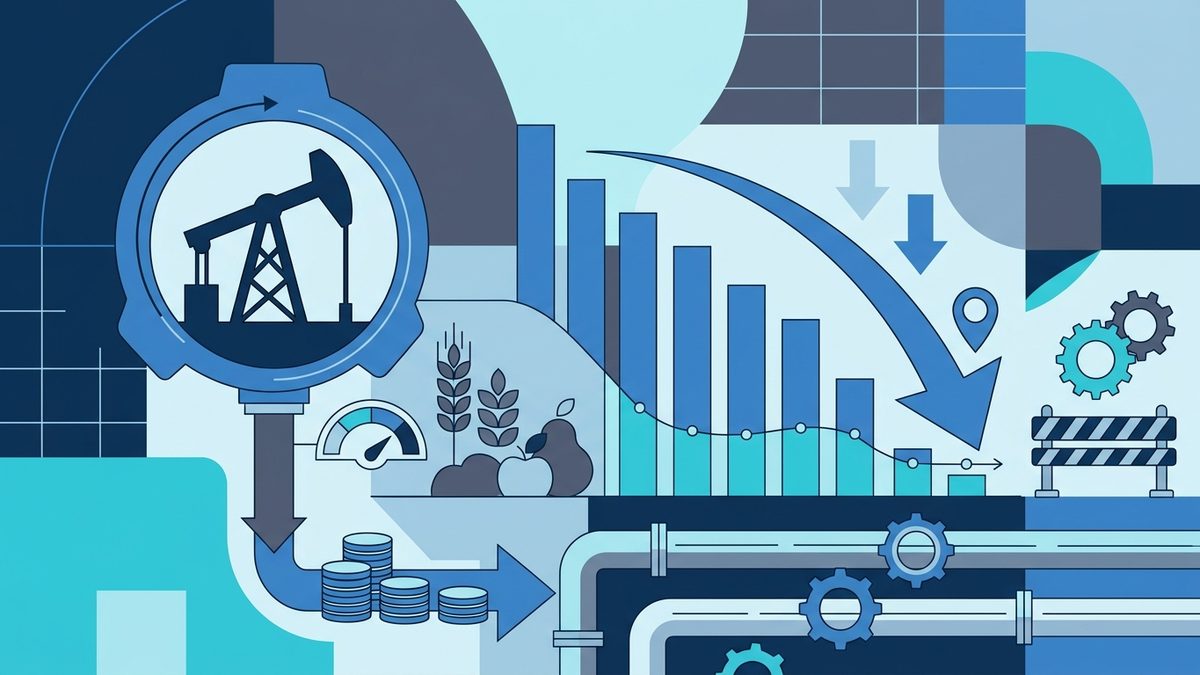
Korea’s consumer price inflation eased to 2.8 percent in July from a year earlier, returning to the 2 percent range for the first time in three months, according to the Ministry of Finance and Economy’s monthly price release. The slowdown was driven by a cooling in petroleum and agricultural product prices, with the government estimating that its petroleum maximum-price scheme alone trimmed 0.3 percentage points off the headline rate.
A Three-Month Detour Ends
The July print closes a stretch in which headline inflation had run above the 2 percent band since the spring. Getting back under 3 percent matters less as a round number than as a direction: the two categories that had been doing the most damage to household budgets — fuel and fresh food — are no longer accelerating at the pace seen earlier in the year.
Energy and farm goods are also the components most visible to consumers, which is why their moderation tends to move inflation expectations faster than an equivalent shift in services prices would. A 2.8 percent headline rate still means prices are rising, but the composition of July’s slowdown is the kind policymakers prefer, since it is concentrated in the volatile items that pushed the index up in the first place.
How Much the Fuel Cap Is Doing
The more contested part of the release is the government’s own accounting of its intervention. Officials put the effect of the petroleum maximum-price system at 0.3 percentage points — meaning that without the cap, July inflation would have printed at roughly 3.1 percent and the return to the 2 percent range would not have happened this month.
That framing cuts both ways. It gives the administration a concrete, quantified win to point to, but it also concedes that a meaningful slice of the disinflation is administrative rather than organic. Price caps suppress measured inflation while they are in force; the test comes when the scheme is unwound and pent-up cost pressure either materializes or proves to have faded on its own.
The Harder Question Underneath
Stripping out the 0.3-point cap effect, underlying momentum still improved — oil and agricultural gains slowed on their own, not only by decree. The open issue for the second half of the year is whether that organic moderation continues, because a disinflation that depends on a price ceiling has a built-in expiry date, while one driven by genuinely cooling input costs does not. July’s data suggests Korea has some of both, and the mix will determine whether the 2 percent handle survives the eventual exit from the cap.
Sources (3) — Yonhap News Agency · Ministry of Economy and Finance
- Yonhap News Agency, 2026-08-03
- Yonhap News Agency, 2026-08-04
- Ministry of Economy and Finance, 2026-08-04
출처: 재정경제부 보도자료, 공공누리 제1유형