Naver Bets on an AI Data Center With Nvidia and Brookfield
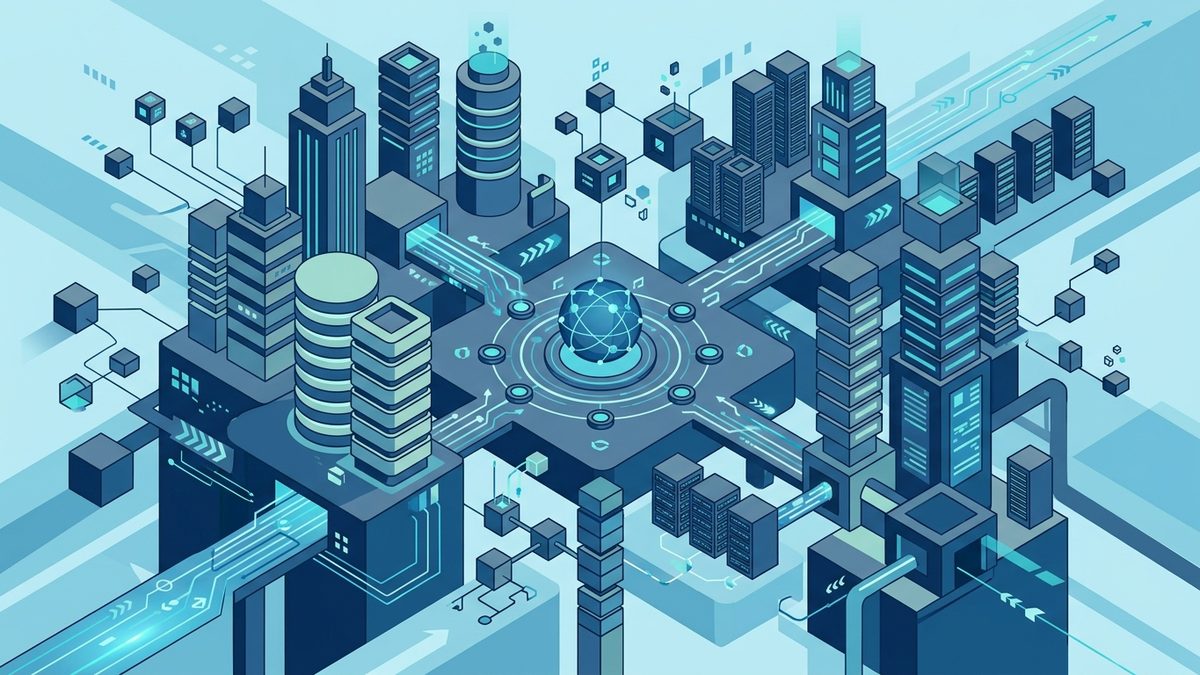
Naver is joining Nvidia and asset manager Brookfield to build a large-scale AI data center in South Korea, a project put at roughly 14 trillion won and described by the company’s backers as a bid to anchor Asia’s biggest AI computing hub. The tie-up pairs Korea’s dominant internet platform with the world’s leading supplier of AI accelerators and one of the largest global infrastructure investors — a combination that, on paper, covers the three things an AI data center needs most: demand, silicon, and capital.
Why Naver is reaching beyond its own walls
Naver Corporation, founded in 1999 and based in Seongnam, built its business on search, mapping, payments, and messaging, and spent the last two decades accumulating consumer data at national scale. Its Knowledge iN question-and-answer service, launched in 2002 well before comparable Western products, has gathered more than 200 million answers, and its dictionary service now spans 67 languages. That history matters here: a platform of that size generates the query volume and training material that make a dedicated AI facility economically rational rather than speculative.
The company has also signaled that it intends to be a builder of AI models, not merely a buyer of them. In October 2023 it released a beta of CLOVA X, its conversational AI assistant, staking a claim to a Korean-language foundation model at a moment when most of the field was being defined by U.S. labs. Training and serving models of that ambition requires far more compute than a search-and-commerce business was ever provisioned for — which is the gap this alliance is meant to close.
What each partner brings
The logic of the three-way structure is straightforward. Nvidia supplies the accelerators that AI training runs on and the software stack that surrounds them; access to that hardware, and to it in quantity, is the binding constraint for anyone building at frontier scale. Brookfield brings the balance sheet and the discipline of an infrastructure operator that treats a data center as a long-lived, financeable asset rather than a one-off capital expense. Naver contributes the anchor demand and the domestic footprint — the workloads, the language, and the regulatory home ground.
For Naver, spreading the cost across an infrastructure financier is the difference between a capital commitment that would strain a single internet company and one that can be carried as a shared, long-horizon investment.
The conditions for it to work
A headline number and three strong names do not by themselves make a hub. The harder questions sit downstream of the announcement.
Power is the first. Facilities on this scale draw electricity at industrial volumes, and securing firm, affordable supply — along with the grid connections and cooling to match — is typically the gating item for a Korean site, not the financing. Utilization is the second: a data center earns its return only if it runs full, which means Naver’s own AI workloads and outside tenants must materialize on roughly the schedule the economics assume. And the “Asia’s largest hub” framing implies serving customers beyond Korea, which raises questions of latency, data-sovereignty rules, and competition with the hyperscalers already building aggressively across the region.
The strategic prize is real. If the facility is built, filled, and powered on the terms its backers are counting on, Naver moves from a company that consumes AI infrastructure to one that owns a piece of the continent’s supply — a meaningful hedge against dependence on foreign cloud providers. The scale of the commitment is not in doubt. Whether the alliance clears the operational conditions that scale demands is what the coming build-out will decide.
Sources (2) — ChosunBiz · The Korea Economic Daily
- ChosunBiz, 2026-07-27
- The Korea Economic Daily, 2026-07-26