Samsung and SK Hynix Whipsaw From Record Crash to Record Rally in Four Sessions
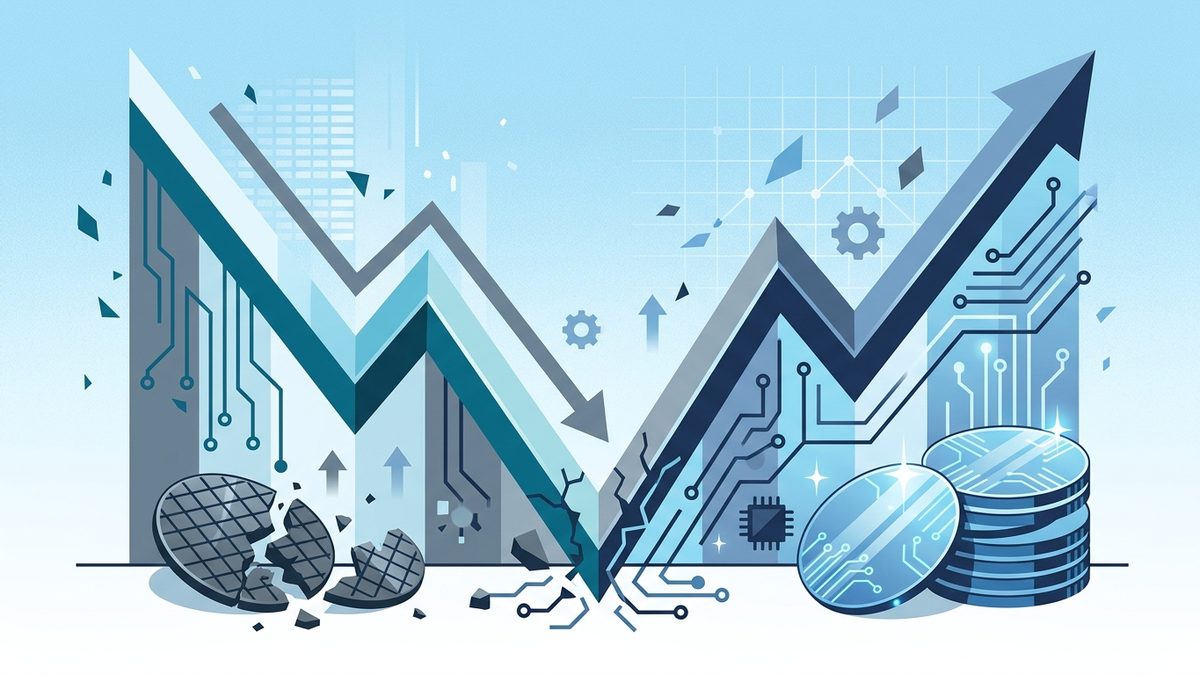
Korea’s two memory-chip giants closed out July with the most violent four sessions in their trading history. Samsung Electronics and SK Hynix finished July 28 down 13 to 14 percent in a record-scale plunge, extended their losses the following day, and then reversed course so hard that by July 31 SK Hynix hit its daily price limit for the first time in 17 years while Samsung Electronics surged 26.8 percent — the steepest single-day rise either stock has ever recorded.
Foreign Money Led the Rush for the Exits
The rout began on July 28, when both stocks closed with losses in the 13-to-14-percent range, a collapse without precedent for shares of this size on the Korean market. Foreign investors drove the selling, dumping shares of both companies in volume. For two stocks that anchor the KOSPI’s market capitalization, a synchronized decline of that depth in a single session marked the worst day either had ever printed.
An Earnings Release That Deepened the Slide
Relief did not come the next morning. On July 29, the day SK Hynix released its financial results, the stock turned lower and was down 9 to 10 percent intraday, while Samsung Electronics traded around 4 percent lower. The scale of the company being repriced is considerable: SK Hynix booked revenue of 66.19 trillion won and net income of 19.80 trillion won in 2024, and it stands alongside Samsung Electronics and Micron as one of the three producers that dominate the global memory business.
A Snapback That Rewrote the Record Book
The reversal arrived just as abruptly. On July 30, Samsung Electronics rallied as much as 7 percent intraday with SK Hynix up around 3 percent, as buying returned to the sector. Then on July 31, with investor appetite for semiconductor shares recovering sharply, both stocks opened the session up roughly 20 percent. By the close, Samsung Electronics had gained 26.8 percent — its largest daily advance on record — and SK Hynix had risen all the way to its daily price limit, something the stock had not done in 17 years.
Ownership Paperwork in the Background
Against this backdrop, two filings sit on the Financial Supervisory Service’s electronic disclosure system. Samsung Electronics submitted a report covering changes in shares held by its largest shareholder and related parties, and Samsung C&T — the group’s founding company, established in 1938, and a key holder in its ownership structure — filed a report on large equity holdings. The disclosures document movement in major shareholders’ positions; neither filing states a connection to the week’s price swings, and none should be inferred.
A Week That Resets the Baseline
What remains after the round trip is a set of statistics that will define these stocks’ history: a record crash, a record rally, a 17-year-first limit-up, and four sessions in which Korea’s two most valuable companies swung by double digits in both directions. Whatever the ultimate driver, the week demonstrated how quickly conviction about the memory sector can flip — and how much of the Korean market’s fate rides on two tickers when it does.
Sources (7) — Yonhap News Agency · DART (Financial Supervisory Service)
- Yonhap News Agency, 2026-07-30
- Yonhap News Agency, 2026-07-28
- Yonhap News Agency, 2026-07-31
- Yonhap News Agency, 2026-07-31
- Yonhap News Agency, 2026-07-29
- DART (Financial Supervisory Service), 2026-07-31
- DART (Financial Supervisory Service), 2026-07-31
출처: 금융감독원 전자공시시스템(DART)