SK Hynix Touches Korea's Daily Limit at 1,718,000 Won — and Analysts Still See Room
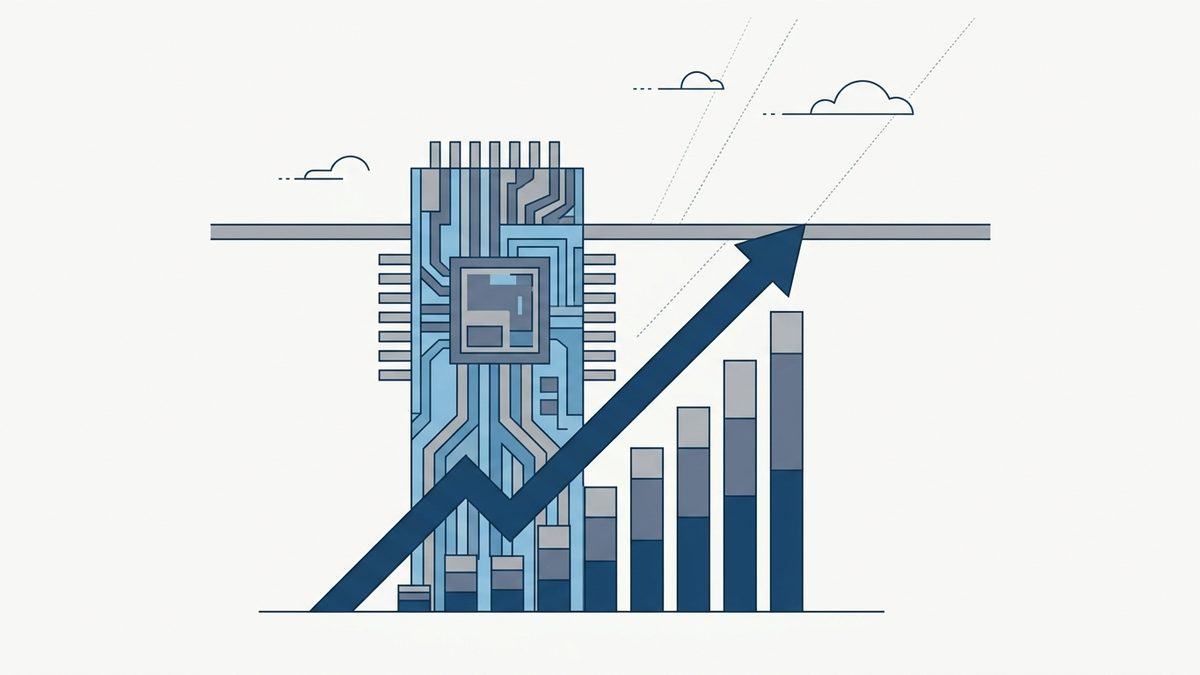
SK Hynix shares surged as much as 29.95 percent on July 31 to 1,718,000 won, pressing against the Korean stock market’s 30 percent daily price ceiling, in a session that also saw Samsung Electronics leap more than 20 percent. The striking part is not the size of the move but what it left unresolved: even at those levels, the two chipmakers were changing hands at only around half the price targets Korean brokerages have set on them.
A Limit-Up Session for the Memory Giants
Korea’s exchange caps single-day moves at 30 percent in either direction, a boundary stocks of this size almost never approach. Large-cap names typically drift in low single digits even on eventful days; a limit-up print in the market’s most heavily weighted sector is the kind of event that defines a trading year. SK Hynix reached 1,718,000 won at its intraday peak, a 29.95 percent gain, while Samsung Electronics — the market’s largest company — posted its own advance of more than 20 percent in parallel.
When the two firms that anchor the KOSPI move together at that scale, the day stops being a stock story and becomes a market story. Between them, Samsung Electronics and SK Hynix account for a dominant share of Korea’s index weight and export earnings, so a simultaneous surge of this magnitude mechanically lifts the entire market and, with it, sentiment across the won and Korea-linked assets.
The Gap Between Price and Target
The detail that separates this rally from a blow-off top is the analyst math. Even after the July 31 spike, the report on the two stocks noted that their prices sat at roughly half the level of brokerage target prices. Read at face value, that means the sell side collectively values the companies at about double what the market was paying even after a limit-up day — an unusual configuration, since violent rallies more often overshoot targets than lag them.
Two readings are possible. The generous one is that analysts, looking at the memory cycle’s earnings trajectory, genuinely believe the repricing is only half done. The cautious one is that target prices set during an upgrade race can lag reality in both directions, and a gap that wide says as much about the speed of recent revisions as about remaining upside. What the gap does establish is that the surge was not a case of prices sprinting past fundamentals as analysts currently model them.
Why These Two Companies Move Markets
SK Hynix booked revenue of 66.19 trillion won in fiscal 2024 and employed 46,863 people that year, ranking alongside Samsung Electronics and Micron in the trio that controls global memory chip production. The company traces back to February 1983, when it was founded as Hyundai Electronics, and took its current form inside SK Group in 2012 after a series of mergers and restructurings. That history matters for context: the firm has lived through every boom and bust of the memory cycle since the industry’s infancy, and its shareholders have learned that cycle amplitude — not steady growth — is the asset class they own.
Samsung Electronics brings the same cyclical exposure wrapped in a far broader conglomerate, which is why the two stocks so often trade as a pair in Seoul, informally fused by local investors into a single ticker of sentiment for Korean tech.
What the Rally Leaves Unsettled
Separately, disclosure filings at Korea’s Financial Supervisory Service showed Samsung Electronics reporting a change in shares held by its largest shareholder group, and Samsung C&T filing a large-holding report on Samsung Electronics stock — routine ownership paperwork on its face, but a reminder that the conglomerate’s shareholding structure remains an active file even as the market reprices its crown jewel.
The open question is durability. A 29.95 percent day compresses months of ordinary returns into hours, and the distance to analyst targets will close from one of two directions: prices rising further, or targets coming down. Which of those happens will say more about the memory cycle than the limit-up day itself did.
Sources (5) — Yonhap News Agency · DART (Financial Supervisory Service)
- Yonhap News Agency, 2026-08-01
- Yonhap News Agency, 2026-07-31
- Yonhap News Agency, 2026-07-31
- DART (Financial Supervisory Service), 2026-07-31
- DART (Financial Supervisory Service), 2026-07-31
출처: 금융감독원 전자공시시스템(DART)